
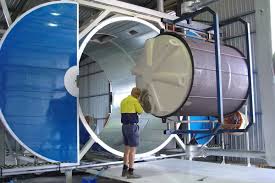
In the competitive landscape of modern manufacturing, achieving both high efficiency and precision is crucial for success. Rotomolding, or rotational molding, has increasingly become the preferred process for producing custom plastic parts that require exacting standards of quality. By combining simplicity with advanced performance,rotomolding stands out for its ability to deliver precise, high-quality results every time while also being cost-effective. Whether for large-scale or small-volume production, the process ensures that each part is crafted to meet the rigorous demands of various industries. This article explores the efficiency of rotomolding and how it consistently delivers precision and excellence across a broad spectrum of applications.
What Makes Rotomolding an Efficient Manufacturing Process?
Rotomolding’s efficiency lies in its relatively straightforward process, which doesn’t require the high pressures and complexities typical of other plastic molding techniques, such as injection or blow molding. The process involves placing a plastic material inside a mold, which is then rotated along two axes while being heated. As the mold rotates, the plastic material evenly coats the inside, forming a uniform layer that hardens once cooled.
What makes this process efficient is its low operational complexity. The molds used in rotomolding are relatively simple, and the need for less intricate tooling results in reduced setup times and lower initial costs compared to other molding techniques. Additionally, rotomolding requires minimal post-processing since the finished part comes out of the mold in its final shape. This not only saves on labor but also reduces the time and cost typically associated with secondary operations.
How Does Rotomolding Ensure Precision in Manufacturing?
Precision in manufacturing is crucial for industries that require parts to fit perfectly within complex assemblies or withstand harsh environments. Rotomolding excels in this area, ensuring that parts have consistent wall thickness and smooth, uniform surfaces. Because the plastic material is evenly distributed throughout the mold during rotation, each product produced exhibits high structural integrity, minimizing the risk of weak spots or defects.
Furthermore, rotomolding’s ability to create parts with tight tolerances ensures that each product meets the exact specifications required. The molds are custom-made to the specific design of each part, which means the final product is precisely shaped according to the needs of the customer. Whether it’s a small, intricate product or a larger, more robust piece, rotomolding maintains a high degree of precision, ensuring the part will fit and function as intended.
Another aspect of precision is the ability to control the wall thickness of the part. Rotomolding allows for different wall thicknesses in different areas of the product, which can be customized based on specific design requirements. This flexibility enables manufacturers to produce parts that are lightweight in some sections and robust in others, depending on where strength is most needed.
What Role Does Rotomolding Play in Product Excellence?
The efficiency and precision of rotomolding naturally contribute to the overall excellence of the finished product. By producing parts that are both strong and lightweight, rotomolding ensures that products are not only functional but also durable. The lack of seams or joints in the final design further enhances the integrity of the part, as these areas are often potential weak points in other molding methods.
Additionally, rotomolding allows for high customization, enabling manufacturers to create products with specific performance characteristics such as UV resistance, impact resistance, and flexibility. These tailored properties make rotomolded products especially suitable for industries that require specialized components, such as automotive, agriculture, and outdoor equipment.
The combination of precision in design and excellence in production quality ensures that rotomolded parts are dependable over time, capable of enduring the stresses and challenges they may face in their operational environments. Whether the part is used in a harsh outdoor setting or in a delicate, high-precision machine, rotomolding provides the quality and durability that manufacturers and consumers rely on.
How Does Rotomolding Achieve Efficiency in Cost and Time?
In addition to delivering precision, rotomolding is highly efficient in terms of cost and time. One of the key benefits of rotomolding is the relatively low tooling cost compared to other molding methods. The molds required for rotomolding are less expensive and easier to manufacture, making it a cost-effective solution, especially for small to medium production runs.
Another time-saving factor is the simplicity of the rotomolding process itself. The steps are fewer compared to more complex molding techniques, and the product comes out of the mold almost ready for use. This reduces the need for extensive post-processing or assembly, streamlining production and saving valuable time.
Additionally, rotomolding’s ability to produce parts in a single, continuous process eliminates the need for extra labor or additional assembly steps. This translates into lower labor costs and faster production cycles, ensuring that products can be manufactured quickly and efficiently.
How Does Rotomolding Contribute to Sustainability?
Efficiency in rotomolding isn’t just limited to time and cost; the process also offers significant sustainability advantages. By generating minimal material waste, rotomolding contributes to reducing the environmental impact of manufacturing. Excess material can often be recycled and reused in future production runs, reducing the need for new raw materials.
Furthermore, many of the plastics used in rotomolding are recyclable, which allows manufacturers to produce products that can be recycled at the end of their life cycle. The ability to create long-lasting, durable products means they are less likely to require replacement, further supporting sustainability efforts by reducing the frequency of product disposal.
The lighter weight of many rotomolded products also contributes to sustainability by reducing energy consumption during transportation. Transporting lighter goods requires less fuel, which ultimately lowers the carbon footprint of the products.
Conclusion
Rotomolding is a highly efficient and effective manufacturing process that consistently delivers precision, quality, and excellence in every part produced. Its ability to create parts with uniform thickness, seamless designs, and tight tolerances ensures that manufacturers can meet the highest standards of performance and functionality. By offering flexibility in design and material selection, rotomolding allows industries to craft innovative, customized solutions that meet specific needs, from automotive components to outdoor products.
With its cost-effective nature, time-saving production process, and sustainability benefits, rotomolding stands out as an excellent choice for industries seeking to produce high-quality, durable parts quickly and affordably. Whether for large-scale production or custom projects, rotomolding is a reliable solution that continues to set the standard for precision and excellence in the manufacturing world.
