
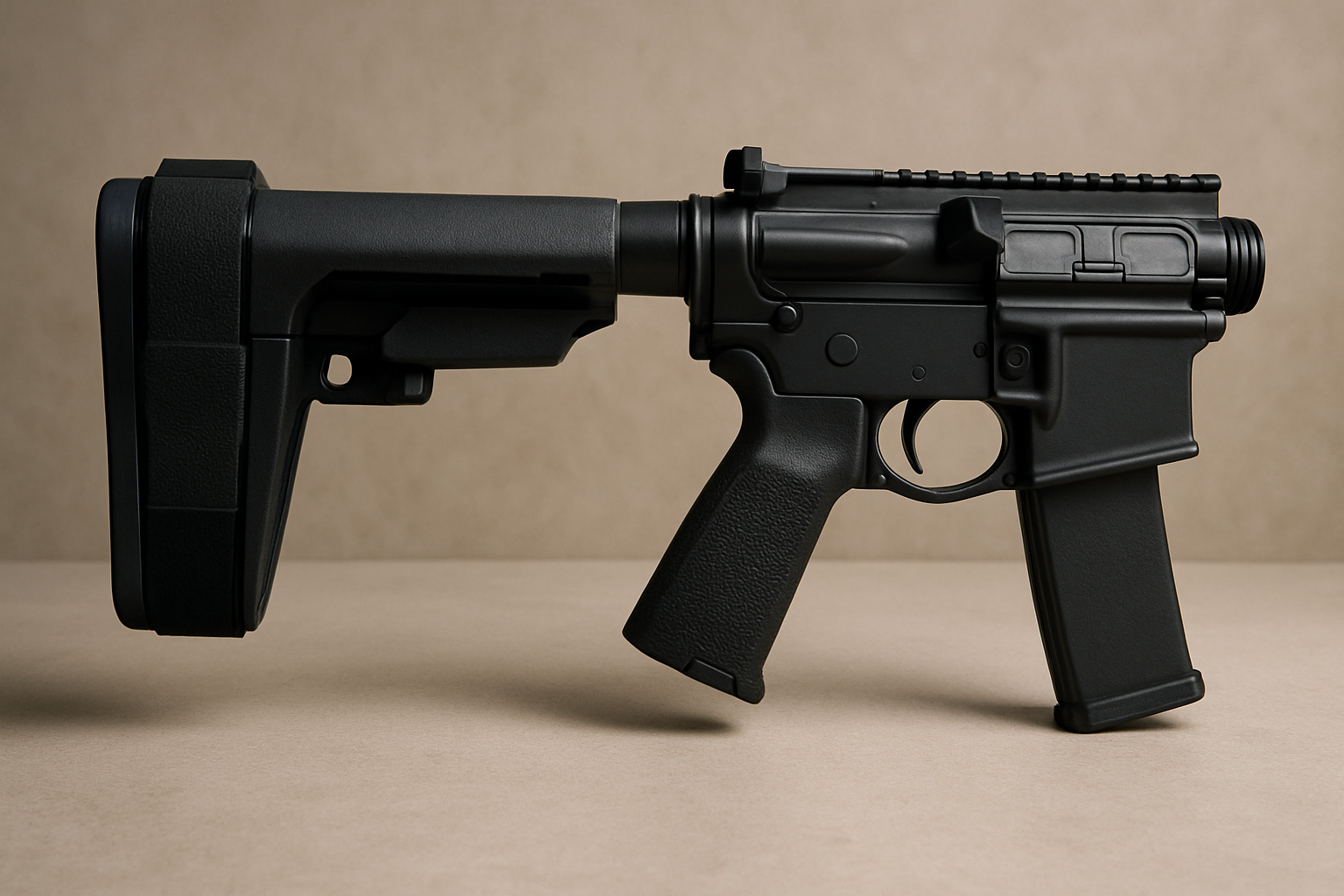
The conversation around pistol braces has grown considerably more complex over the past several years. Owners who purchased braced pistols under one set of rules have found themselves navigating an increasingly layered regulatory environment. For those who own a polymer-framed pistol with an attached stabilizing brace, the p80 brace discussion touches on questions that go far beyond simple accessory use — it reaches into federal classification law, state-level compliance, and the practical realities of responsible firearm ownership.
Why Does Firearm Classification Matter for Brace Owners?
Classification determines which laws apply to a given firearm. Under the National Firearms Act, short-barreled rifles are regulated items that require registration, tax payment, and approval before transfer or manufacture. A pistol configured with a stabilizing brace has, under most prior guidance, been treated as a pistol rather than an SBR — but that distinction depends heavily on how the firearm is configured and how it is used.
Owners who modify their setup without understanding classification rules may unintentionally cross from a legal configuration into one that requires NFA registration. The risk is not theoretical. Federal enforcement of NFA violations carries serious consequences, making accurate knowledge a genuine necessity.
What Triggered the Recent Legal Disputes Over Pistol Braces?
The ATF’s 2023 rulemaking on stabilizing braces generated widespread controversy and legal action. The rule established a point-based worksheet system to evaluate whether a braced pistol should be reclassified as an SBR. Critics argued the system was vague, inconsistently applied, and exceeded the agency’s statutory authority.
Multiple lawsuits followed. Federal courts in several circuits issued preliminary injunctions that blocked enforcement of the rule for named plaintiffs and, in some cases, broader groups. The result was a patchwork legal environment where the same firearm configuration might be treated differently depending on whether the owner was covered by a court order.
This situation underscored how important it is for owners to monitor ongoing litigation, not just final rules, when assessing their compliance obligations.
How Should Owners Approach Brace Selection and Installation?
From a safety standpoint, selecting a brace that is compatible with a specific firearm platform is the first step. Not all braces are designed to fit all pistol configurations equally well. A brace that does not seat securely can introduce instability and affect accuracy and control during use.
Installation should follow the manufacturer’s specifications precisely. Owners should verify that the brace does not alter the firearm’s overall length or barrel length in a way that triggers additional regulatory requirements. When in doubt, a licensed gunsmith can confirm whether a particular configuration remains within legal parameters.
Are There Special Considerations for Home-Built Pistol Platforms?
Home-built firearms, sometimes called “80 percent builds” or “privately made firearms,” carry additional layers of regulatory attention. The ATF has specifically addressed serialization requirements and transfer restrictions for privately made firearms in recent years.
When a stabilizing brace is added to a home-built pistol, both the brace regulations and the privately made firearm regulations apply simultaneously. Owners of these platforms should be especially diligent in understanding how each set of rules interacts with the other, as compliance failures in either area can create serious legal exposure.
What Resources Can Help Owners Stay Compliant?
Staying current does not require a law degree, but it does require consistent effort. Reliable resources include the ATF’s official website, which publishes rulemakings, open letters, and enforcement guidelines. Firearms policy organizations frequently provide plain-language summaries of regulatory changes. For configuration-specific questions, a firearms attorney with NFA experience offers the most reliable guidance.
Owning a braced pistol responsibly means treating legal education as part of the ownership experience — not an afterthought. The regulations surrounding these firearms will continue to evolve, and owners who stay engaged are far better positioned to protect both their rights and their compliance standing.
